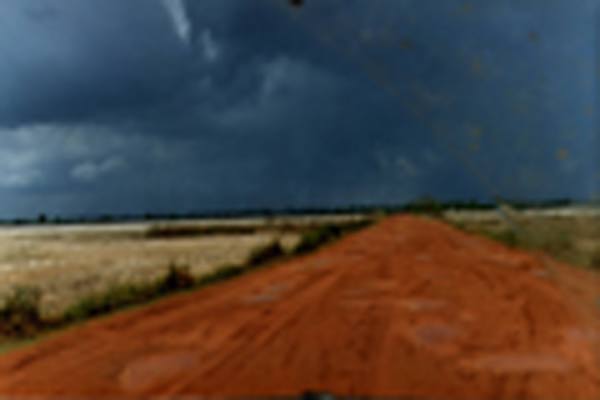
 Route No. 6.
This road is notorious for Khmer Rouge and bandit activity, as
well as wayward government soldiers on check points. It is also
full of pot holes and takes about three hours to travel 100km.
Route No. 6.
This road is notorious for Khmer Rouge and bandit activity, as
well as wayward government soldiers on check points. It is also
full of pot holes and takes about three hours to travel 100km.
The silk growers, weaver, villagers all operate in a society which is just beginning to come out of about 25 years of civil war. Even as you read this there is still fighting going on in the north-west of Cambodia. The heaviest fighting reported in April of 1996 is in the Battambang and Banteay Meancheay regions. Some of the silk growers live close to or in this area. This web site doesn't really address the huge issue of the impact of land-mines on the Cambodian people, it doesn't talk about the impact of the legacy of the Khmer Rouge genocide, the years of Vietnamese occupation, the developments that made the UN sponsored elections possible in 1993 or the problems Cambodia is experiencing today as it rebuilds its civil society. But all of these events, goals and aspirations have a direct impact on the efforts of those involved in silk and craft production.
The main problems faced to develop the silk industry in Cambodia, and maybe to develop any industry in Cambodia for that matter, are:
Route No. 6.
This road is notorious for Khmer Rouge and bandit activity, as
well as wayward government soldiers on check points. It is also
full of pot holes and takes about three hours to travel 100km.
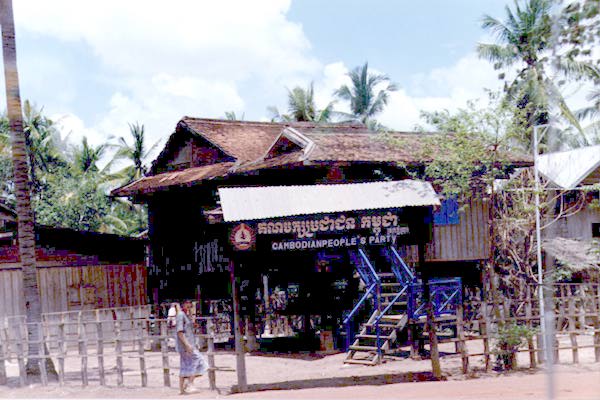 The two main
political parties , maintain a visible presence in villages like
Phnom Srok.
The two main
political parties , maintain a visible presence in villages like
Phnom Srok.
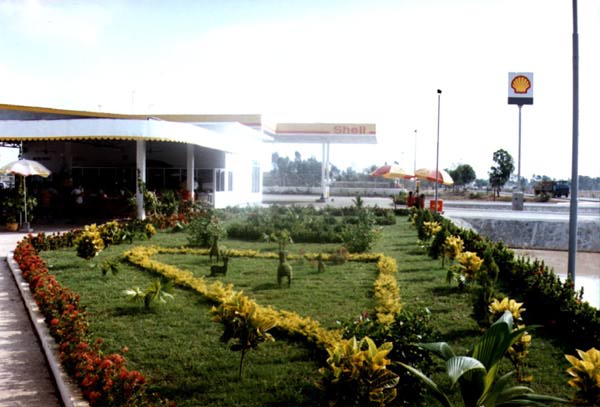 This Shell gas
station is a symbol of a modern era. It is a great place to meet
and a popular weekend hangout. Shell and other oil interests are hoping to exploit
oil reserves off the Cambodian coast line.
This Shell gas
station is a symbol of a modern era. It is a great place to meet
and a popular weekend hangout. Shell and other oil interests are hoping to exploit
oil reserves off the Cambodian coast line.
These pictures are of 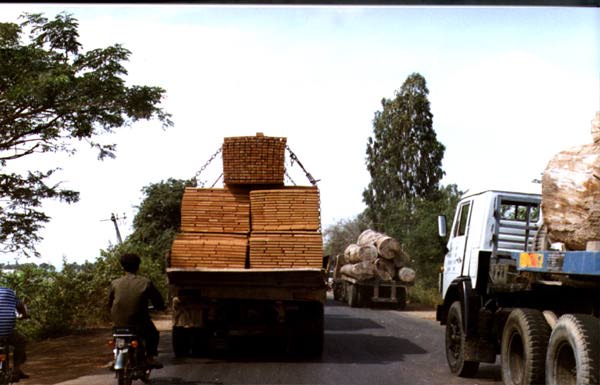 logs
and sawn timber, headed to the port of Shianoukville after the
official ban on logging was declared.
logs
and sawn timber, headed to the port of Shianoukville after the
official ban on logging was declared.
