To see the small photographs click on them and you will
see more detail. If you have a slower computer you may want to
view the photos in their smaller size.
Weaving and silk weaving in particular is part of Cambodian tradition.
Like many countries in Southeast Asia and other countries in the
world, Cambodian silk uses a type of ikat but there are also other
types of silk and silk design. In addition to silk weavers mix
silk with cotton. Today they use a cotton synthetic combination,
but in the past they used pure cotton. The combination threads
create a soft and durable cloth with its own special quality.
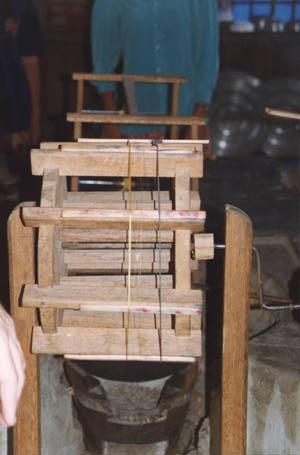
Spinning is
very important to the end product of silk. This is a well constructed
spindle. It is evenly round and solid. Its mechanical spinning
handle is very important because it makes it easier to get an
even thread.
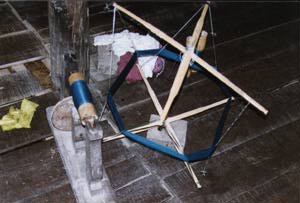
Less sophisticated
spinning also works but it gives a slightly uneven thread.
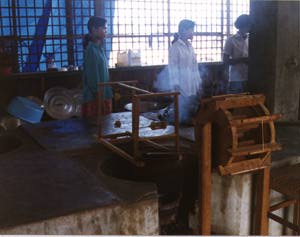
Training of spinners
at the Siem Reap Center. Funded by Caisse Francaise du Development.
The thread is spun to get an even texture.
Designs and Weaving
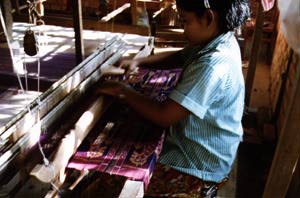
Weaving for temple hangings is an ancient custom. Weaving pidan, or temple
hangings. The tecnique of weaving pidan is one of the most difficult
of ikat weaving. As with all ikat the design is conceptualised
and dyed into the thread before it is loaded onto the loom.
Here is the story of a Khemara master weaver who trains Khemara's
weavers. It is kindly shared with us from Carol Wagner's forth
coming book,Loss and Recovery:
The stories of women and children.
The plain pamoeng
or plain silk is decorated with the raw silk, undyed. The raw
silk will bleach with time and turn white. The plain pamoeng is
also used with adornment for men's ceremonial dress.
Designs vary
and show the influence of time spent by the master weavers on
the Thai borders. Trainers from Thai weaving villages taughtCambodian refugees their
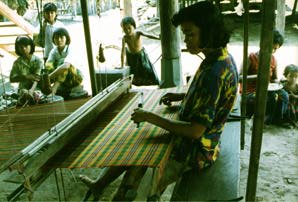
traditions. Weaving cotton
and silk to make an apsara scarf.
Sarong
woven in Phnom Srok. Sarong are worn by men as casual home wear.
The sarong is usually a bright checkered combination.
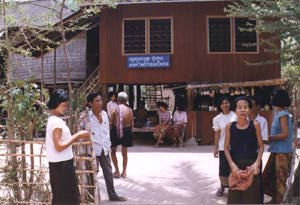
Khum Tnot
Silk Weaving Center, Takeo. 50 kilometers south east of Phnom
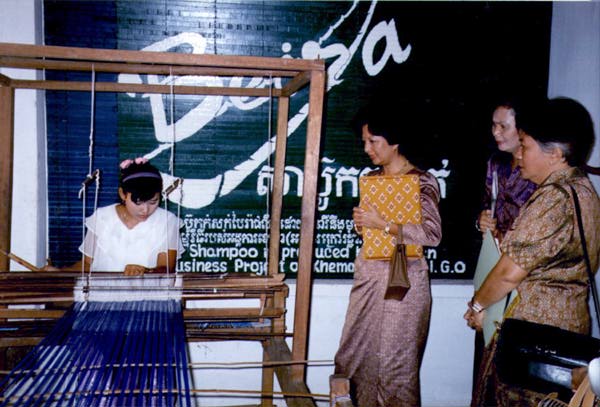
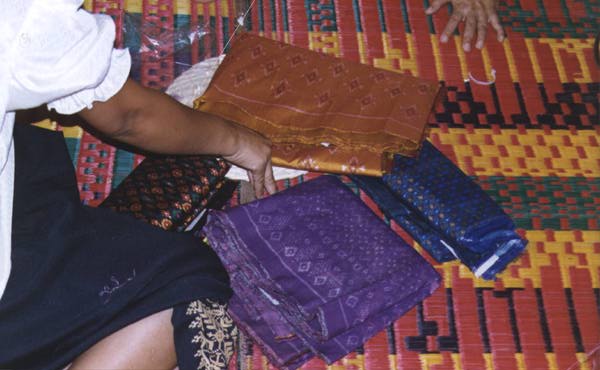
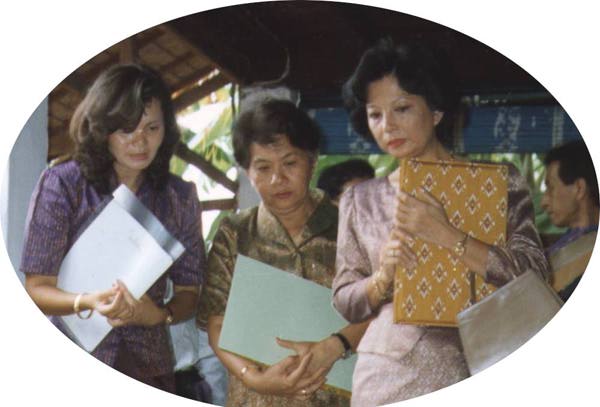
Penh. The silk they weave is recognisable for its delicate shapes. The Princess Marie,
Patron of the Cambodian Silk Weaving Revitalisation project and
Sochua Mu Lieper, look on as Khemara weavers spin the silk thread.
The Princess wears a beautiful example of Takeo designs in high
quality weaving.
Main Silk types by region and design
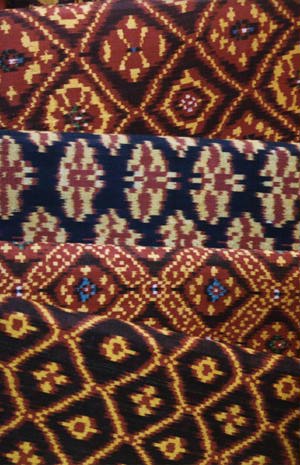
Kam Pong Cham Designs.
Traditionally woven by women of the Cham minority. The Cham people are a minority in
Cambodia who are distinguished by their religion, which is muslim.
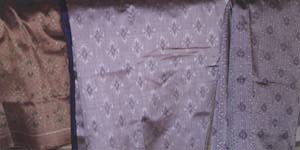
Takeo designs for women are in typically softer colors .
All these silk samples are examples of ikat weaving. This highly sophisticated
weaving technique can be achieved on all these loom types. However, greatest consistency is arrived at by
even tension throughout the loom.
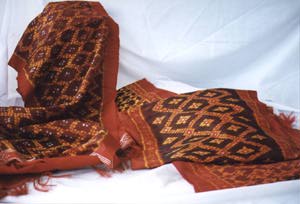
Silk Kroma
Woven by Khemara weavers. These kroma show the influence of the
Cham master weaver who taught the women to weave. The kroma is
a typical Khmer cloth and the designs here are typical of the
cham people.


 Spinning is
 Less sophisticated
 Training of spinners
 Weaving pidan
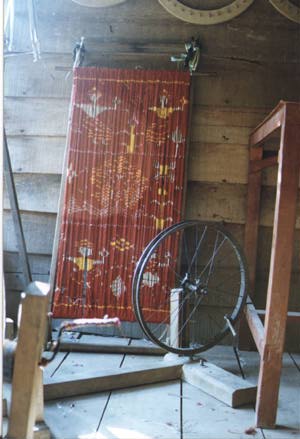 loaded onto the loom
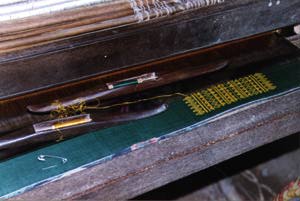 The plain pamoeng
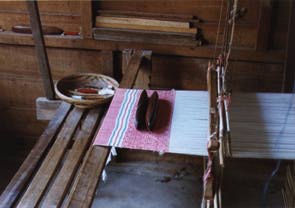 Designs
 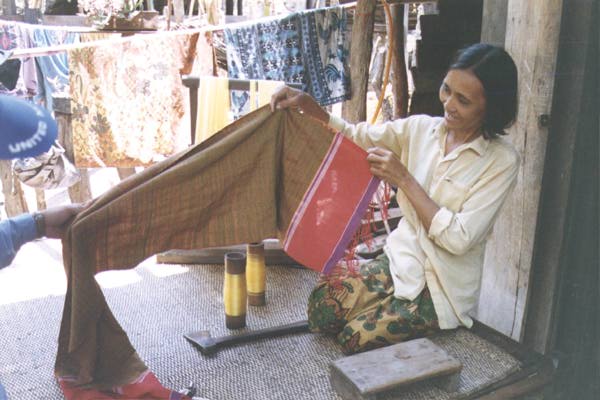 Cambodian refugee
 Weaving cotton
 Sarong
 Khum Tnot
 its delicate shapes.
 The Princess Marie
 Designs.
  softer colors
  Silk Kroma
 click here.